What Whole Person Care Actually Requires: The Data Gap No Supplement Platform Has Solved
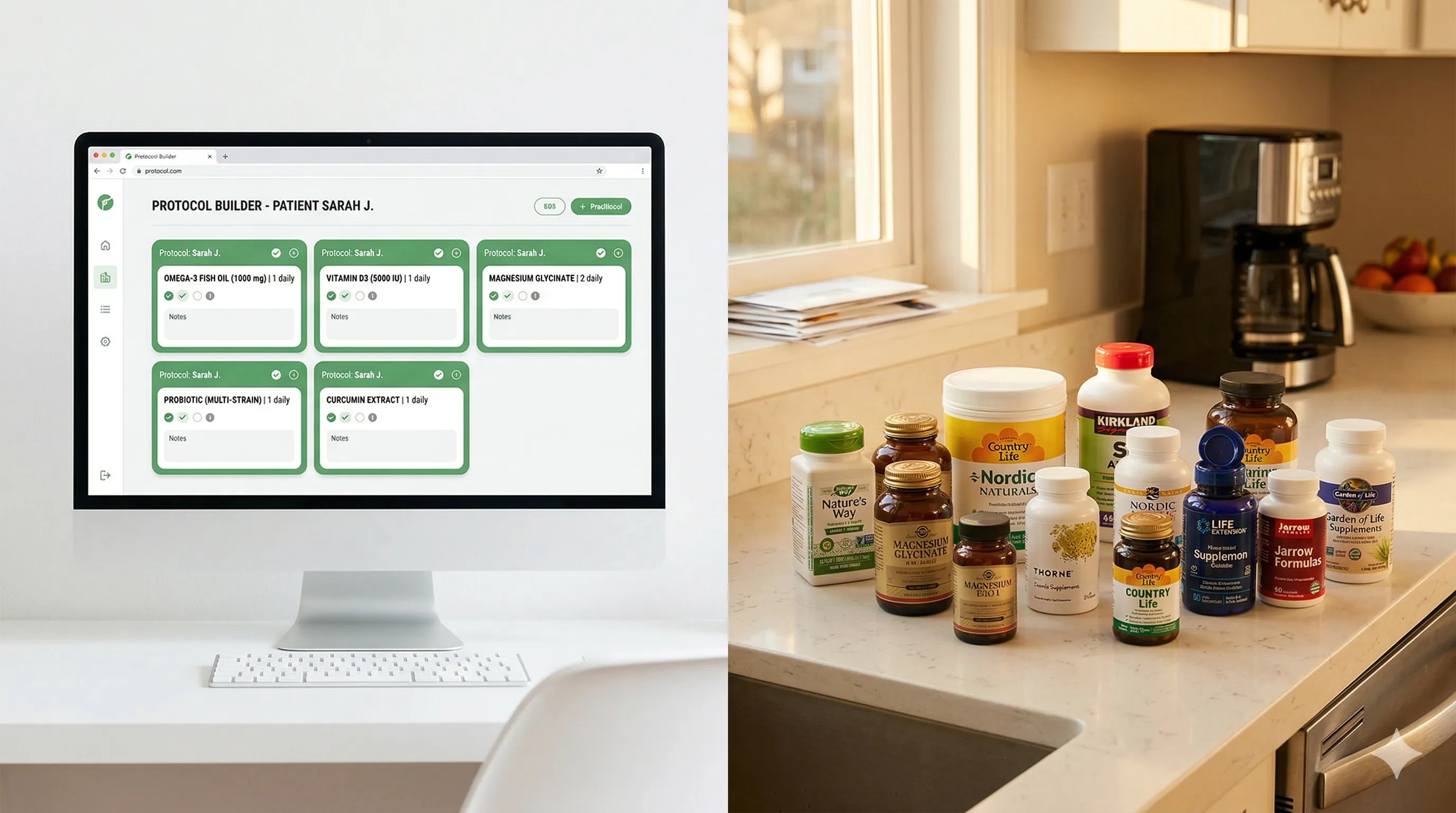
“Whole person care” has become the organizing phrase of the functional and integrative medicine technology market. Every major platform building tools for practitioners uses some version of it. The premise is correct and the aspiration is genuine: good clinical care requires seeing the complete picture of a patient’s health, not just the pieces that arrived through formal clinical channels.
The problem is that none of the platforms building toward whole person care can currently see the piece of the picture that is most commonly self-managed, most commonly incomplete in clinical records, and most commonly the source of unrecognized interactions: what patients are taking in supplements, on their own, from sources outside the clinical relationship.
Until that gap closes, whole person care is a positioning statement. Here is what closing it actually requires.
What the Current Generation of Platforms Can See
The supplement and clinical technology market has made genuine progress in the last few years. Practitioners today have access to tools that would have seemed sophisticated a decade ago.
Dispensary platforms can manage professional-grade supplement catalogs, check interactions within their product sets, track orders and refills, and surface basic compliance data based on reorder patterns. The best of them have added AI-assisted protocol building, lab integration, and patient mobile apps for adherence support.
Practice management platforms have added nutrition planning tools, telehealth, automated charting, lab ordering, and increasingly sophisticated workflow automation. They integrate with dispensary platforms to bring supplement ordering into the same interface as appointment management and clinical notes.
The result is a meaningfully better clinical environment than existed five years ago. Practitioners can build, manage, and dispense supplement protocols in integrated digital workflows that were previously fragmented across multiple tools.
What None of Them Can See
Here is what every one of these platforms has in common: their supplement intelligence is anchored to their catalog or their dispensary relationship.
A platform can check interactions between the products it carries. It can track refills for products ordered through its dispensary. It can build protocols from its product library. It cannot see the magnesium the patient has been taking from Costco for three years. It cannot see the high-dose vitamin C ordered from Amazon last month. It cannot see the sleep supplement from a direct-to-consumer brand, the collagen powder from a wellness subscription, or the fish oil the patient has been taking since before they started working with any practitioner.
This is not a feature gap. It is a structural constraint. These platforms are built around the clinical relationship — what was prescribed, what was ordered, what went through professional channels. The supplement economy that exists outside those channels is structurally invisible to them.
And that outside economy is not small. Approximately 80% of supplement sales in the United States occur outside professional dispensary channels — Amazon, Costco, mass market retail, direct-to-consumer brands. The 20% that flows through professional channels is the part clinical tools can see. The 80% is the blind spot.
Why This Gap Matters Clinically
The case for clinical visibility into self-managed supplements is not philosophical. It is practical and specific.
Supplement interactions do not care whether a product was prescribed or self-purchased. Absorption competition between iron and calcium happens regardless of where either was bought. The anticoagulant effect of high-dose omega-3s does not distinguish between a dispensary product and an Amazon purchase. A patient self-supplementing with high-dose B6 from a retail energy supplement, on top of a practitioner-prescribed B-complex, is approaching the tolerable upper intake level through stacked sources that no clinical tool is currently connecting.
Compliance data based on dispensary refill patterns tells a practitioner whether a patient reordered a product. It does not tell them whether the patient is actually taking it, whether they took it at the right time, or whether they switched to an equivalent product from a different source. The compliance picture drawn from order data is an approximation of patient behavior. It is not patient behavior.
And the supplement picture changes constantly. The static intake form captures what a patient was taking when they filled it out. Within three months — after a podcast recommendation, a friend’s suggestion, a sale on Prime Day, a new health concern — the picture has shifted. The form has not.
What Whole Person Supplement Care Actually Requires
Genuine whole person care in the supplement domain requires three capabilities that the current generation of platforms does not have together in a single system:
Complete intake — not just clinical intake. The patient’s full supplement stack, including everything self-purchased outside the clinical relationship, captured through a mechanism that does not rely on manual recall. A mobile scan that works for the Costco magnesium and the Amazon fish oil and the wellness subscription powder, not just for the dispensary products.
Living data — not static records. A supplement picture that updates as the patient’s stack changes, not just when they fill out an intake form. When the patient adds a new supplement between appointments, the clinical record should reflect that before the next appointment begins, not after.
Bidirectional intelligence — not one-way prescribing. A loop where the patient’s actual supplement behavior informs the clinical picture, and the clinical response informs the patient’s behavior. Not just dispensary-to-patient protocol delivery, but patient-to-practitioner stack visibility, practitioner-to-patient protocol adjustment, and patient compliance data flowing back to inform the next clinical decision.
None of these capabilities exist together in the current clinical supplement technology landscape. Dispensary platforms deliver protocols to patients. Patient apps track what patients self-report. Practice management platforms manage the appointment workflow. The connections between these systems are partial at best.
The Platform Architecture That Closes the Gap
The data gap in whole person supplement care is not primarily a technology problem. The technology to scan supplement labels, check interactions, build protocols, and track compliance already exists. The problem is architectural.
Closing the gap requires a two-sided system — a consumer-facing intake tool that reaches patients regardless of whether they were invited through a clinical relationship, and a practitioner-facing intelligence layer that sees the complete stack the consumer intake tool captures. Not two separate products that integrate, but two interfaces into the same underlying intelligence.
The consumer tool must work for the self-directed health consumer who has never heard of a supplement dispensary. The practitioner tool must see everything the consumer tool captures — including the supplements that never went through professional channels. The intelligence that connects them must cover the full interaction landscape, not just the catalog of a specific dispensary.
This architecture does not currently exist as a complete system in the supplement technology market. Building it is what StaqMed is doing with StaqWell.
Join the StaqWell founding practitioner cohort
Whole person care requires seeing the whole person’s supplement stack. The tools to do that are being built now — and the practitioners who are part of building them will have shaped the standard of care for the next decade.
Join the waitlist
Join the StaqWell founding practitioner cohort
No spam, ever. Unsubscribe anytime. Your data stays private.