Magnesium Glycinate vs. Magnesium Oxide: What I Tell Every Patient Before They Buy
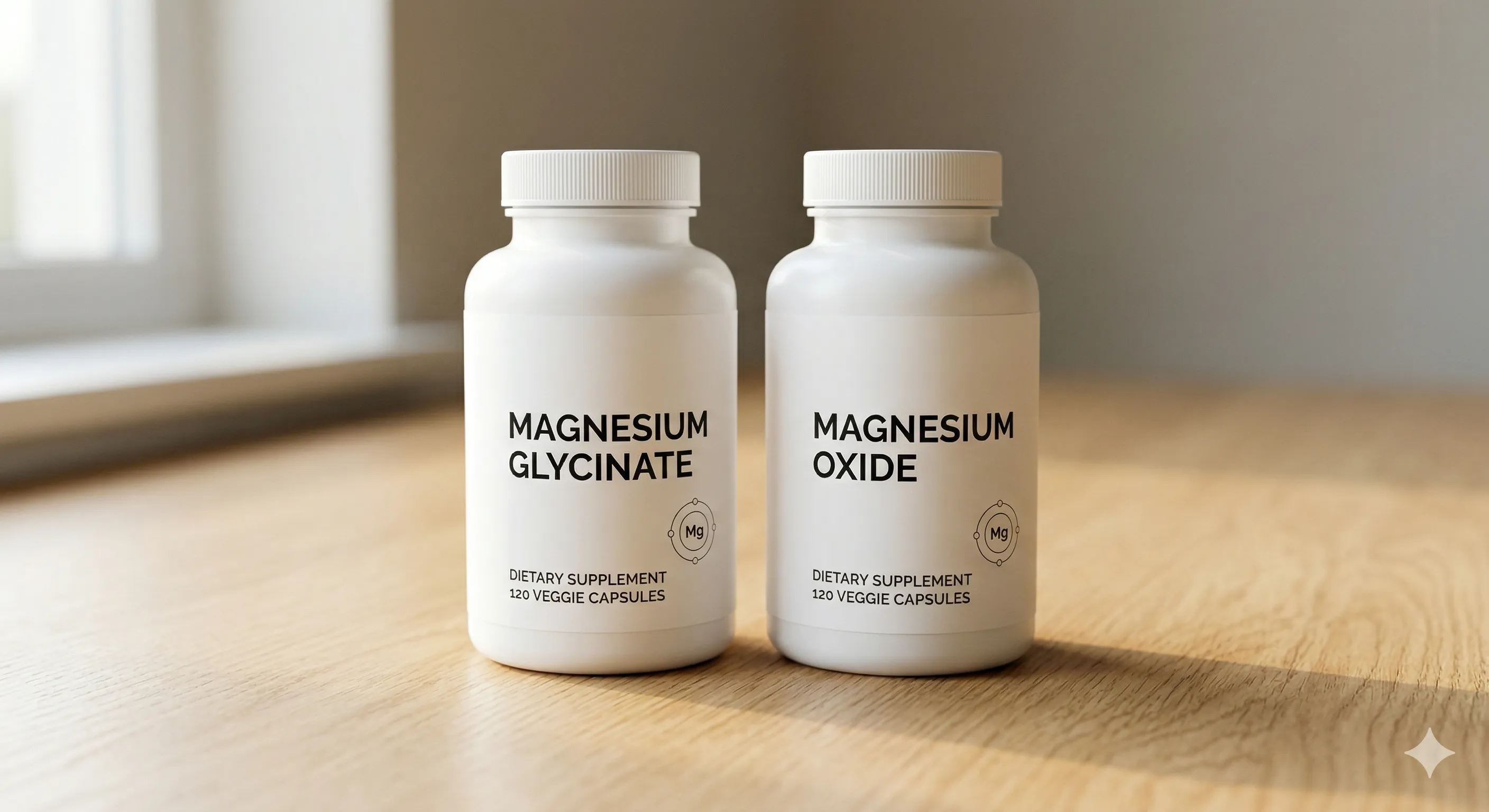
In over twenty years of clinical practice, magnesium comes up in almost every patient conversation about supplementation. It is one of the most depleted minerals in the modern Western diet. It is cofactor for over 300 enzymatic reactions. And it is, without question, one of the most poorly purchased supplements in every health food store and Amazon search result.
The most common form sold — magnesium oxide — is also the least bioavailable form available. The form I recommend most often — magnesium glycinate — sits two shelves over, often costs the same or less per milligram of absorbed magnesium, and delivers substantially better clinical outcomes for the conditions most of my patients are managing.
Here is what the research shows and what I actually tell patients before they buy.
Why Form Matters More Than Dose
Magnesium supplements are not equivalent. The elemental magnesium content on the label — “500mg of magnesium” — tells you how much magnesium is in the capsule. It does not tell you how much reaches systemic circulation, crosses into cells, or participates in the enzymatic functions you are supplementing to support.
Absorption depends almost entirely on the compound the magnesium is bound to — the form.
Different forms are absorbed through different intestinal mechanisms, at different rates, and with different efficiency. A 500mg magnesium oxide capsule and a 500mg magnesium glycinate capsule contain the same elemental magnesium on the label. They do not deliver the same amount of magnesium to your tissues.
Magnesium Oxide: The Problem With the Default
Magnesium oxide is the most commonly sold magnesium supplement in mass market retail channels. It is inexpensive to manufacture, has a high elemental magnesium content by weight, and therefore allows manufacturers to advertise high milligram doses at low price points.
The bioavailability research tells a different story. Studies consistently show magnesium oxide absorption at approximately 4% in healthy subjects — meaning roughly 4 grams out of every 100 grams consumed reaches systemic circulation. A 500mg magnesium oxide capsule delivers approximately 20mg of absorbed magnesium.
The majority of magnesium oxide that is not absorbed remains in the intestinal lumen, where it draws water osmotically. This is why magnesium oxide is also sold as a laxative. It is effective at that application. For systemic magnesium repletion, it is among the least effective options available.
Patients on magnesium oxide who report no GI distress are often simply not absorbing enough to have an effect — on either the intended system or the digestive tract.
Magnesium Glycinate: What the Research Supports
Magnesium glycinate — also labeled as magnesium bisglycinate, referring to the two glycine molecules chelated to each magnesium ion — is absorbed through a different mechanism than inorganic magnesium salts. The glycinate chelate is absorbed via peptide transport pathways in the small intestine that are separate from the mineral absorption pathways that become saturated at high doses.
Bioavailability studies on magnesium glycinate consistently show absorption rates of 50–80%, compared to oxide’s 4%. The practical implication: a 200mg magnesium glycinate capsule delivers roughly the same or more absorbed magnesium as a 500mg magnesium oxide capsule, often at a similar total cost.
Beyond absorption, glycine itself is not a neutral vehicle. Glycine is an inhibitory neurotransmitter precursor with independent calming and sleep-supportive effects. For patients supplementing magnesium specifically for sleep quality, muscle tension, or anxiety — the three most common presentations I see in clinical practice — glycinate’s glycine component provides a complementary mechanism.
Clinical applications where I preferentially recommend magnesium glycinate:
- Sleep onset difficulty and restless sleep
- Muscle cramps, tension, and spasm
- Anxiety, nervous system dysregulation
- PMS and menstrual cramping
- Constipation where gentle effect is preferred without the osmotic urgency of oxide
Other Forms Worth Knowing
Magnesium malate: Malic acid chelate. Good absorption, energizing rather than sedating — the malate participates in the citric acid cycle. I recommend this for fibromyalgia, fatigue, and patients who find glycinate too sedating.
Magnesium threonate: Crosses the blood-brain barrier more effectively than other forms. Specifically researched for cognitive function and neurological applications. More expensive. Reasonable if the clinical target is cognitive — less relevant for musculoskeletal or sleep applications.
Magnesium citrate: Better absorbed than oxide, less than glycinate. Common in powdered magnesium supplements (Natural Calm is the prominent brand). Mild laxative effect at higher doses. Adequate for general supplementation; not my first choice when glycinate is available at comparable cost.
Magnesium taurate: Taurine chelate with cardiovascular research interest. Less common, limited availability, reasonable for cardiac-focused protocols.
The Dose Question
For most adults supplementing for general magnesium repletion, sleep, muscle function, or stress — 200–400mg of elemental magnesium glycinate daily is the range I work within clinically. Lower end for maintenance; higher end for active repletion in documented deficiency.
Timing matters. Magnesium glycinate taken at night, 30–60 minutes before bed, leverages both the direct mineral effects and the glycine’s calming properties for sleep support. Magnesium malate works better taken in the morning or with breakfast for energy-focused applications.
Labs worth checking before high-dose repletion: serum magnesium (normal serum levels don’t rule out intracellular deficiency — RBC magnesium is more sensitive), kidney function for anyone with impaired renal clearance. Magnesium is renally excreted; supplementation at therapeutic doses requires functional kidneys.
What I Tell Patients Before They Buy
If you are standing in a health food store or looking at Amazon search results for magnesium, here is the short version:
Turn the bottle over and look at the supplement facts panel. Find the line that says “Magnesium (as _____).” If the blank says oxide, put it back. If it says glycinate, bisglycinate, malate, or threonate, you are in the right section of the form spectrum for systemic supplementation.
The elemental magnesium number on the front of the bottle is a marketing figure. The form on the back of the bottle is the clinical figure.
StaqWell can scan any magnesium supplement you pick up — in a store, on Amazon, or from your cabinet at home — and tell you the form, the absorbed magnesium estimate, how it fits with everything else you’re taking, and whether the form is appropriate for your specific health goals. No need to memorize the form hierarchy at the store.
Scan your magnesium supplement to see what’s in yours
The form is the dose. Buy accordingly.
Join the waitlist
Scan your magnesium supplement to see what's in yours
No spam, ever. Unsubscribe anytime. Your data stays private.